7SC Frontage SpeedWeed (Seaweed+Lights+Power) Building and Installation Instructions
Published: 2026
SpeedWeed Building Kit Ingredients:
- 3 hot knives for cutting fabric
- 3 lengths of wood to protect the tables
- One 20’ completed speedweed bundle, as an example
- 4 20’ extension cords
- 4 20’ icicle lights
- A 90’ hank of green rope
- A box of fabric to cut the seaweed from
- A bag of Magnets with zipties
- A tube of fabric glue
Each 20’ length of SpeedWeed is a bundle comprised of:
- A 3 outlet, 20’ exterior-rated extension cord
- A 20’ length of icicle style LED christmas lights
- A 20’ string of ‘seaweed’ strands
The bundle is held together by zipties attached to magnets every 12” to 18”. The magnets will attach the speedweed to the shade structure conduit.
How To Make the Seaweed String
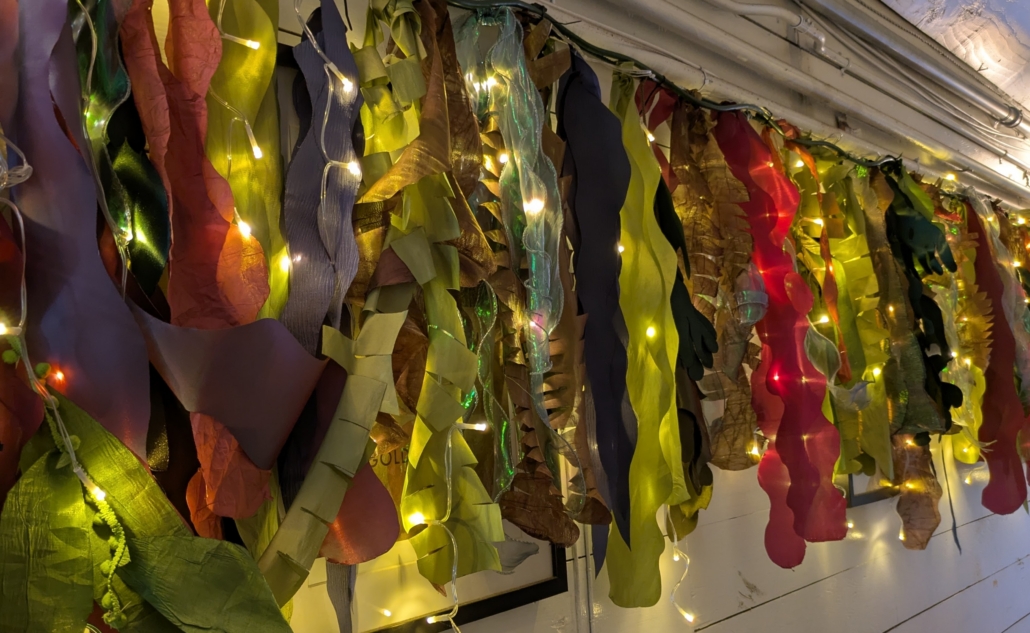
You’ll cut the seaweed pieces out of fabric using a hot knife (wood burning tool or soldering iron). This is fast, easy, and melts the edges so there’s no fraying or moop. You’ll hang the seaweed strands along a 20’ piece of rope. Then you’ll bundle the seaweed with an extension cord and a strand of christmas lights and tie it all together with zipties attached to magnets.
Cutting
First stretch out a piece of fabric flat on top of a long board, with the cut edge facing you. Some of the fabric is wider than 48”, in which case plan out your pieces, like this:
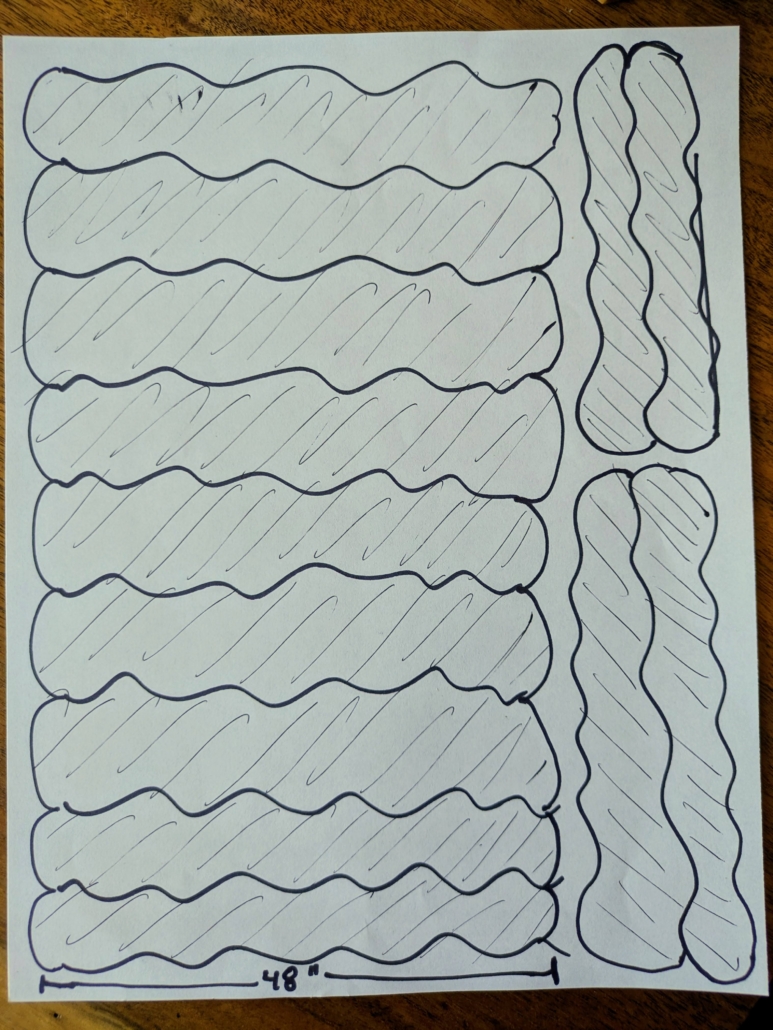 |
so you make sure to use up all the fabric – plan to cut some that run along the edge like in this drawing. |
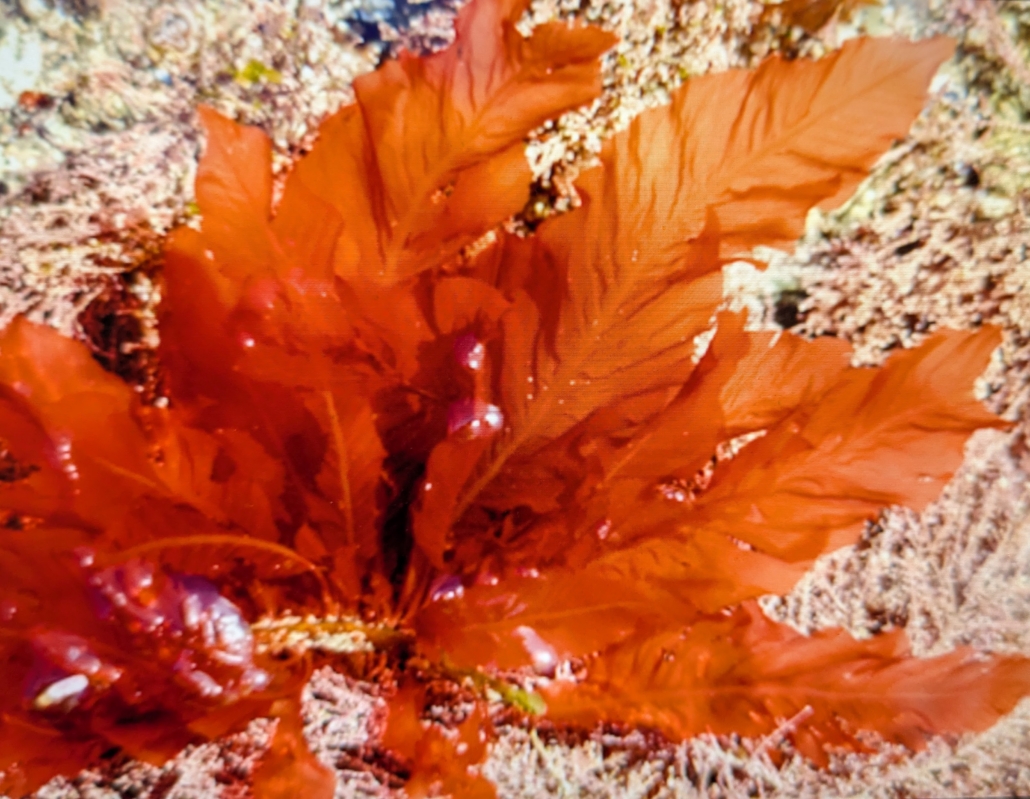
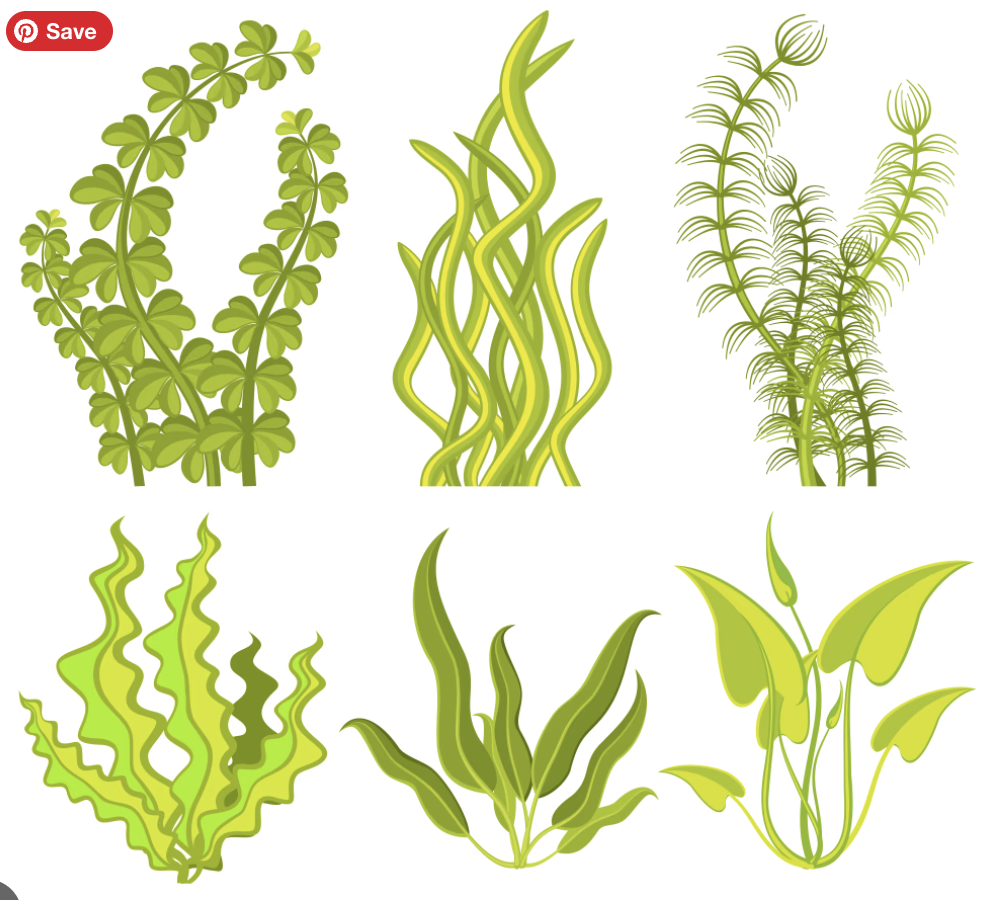
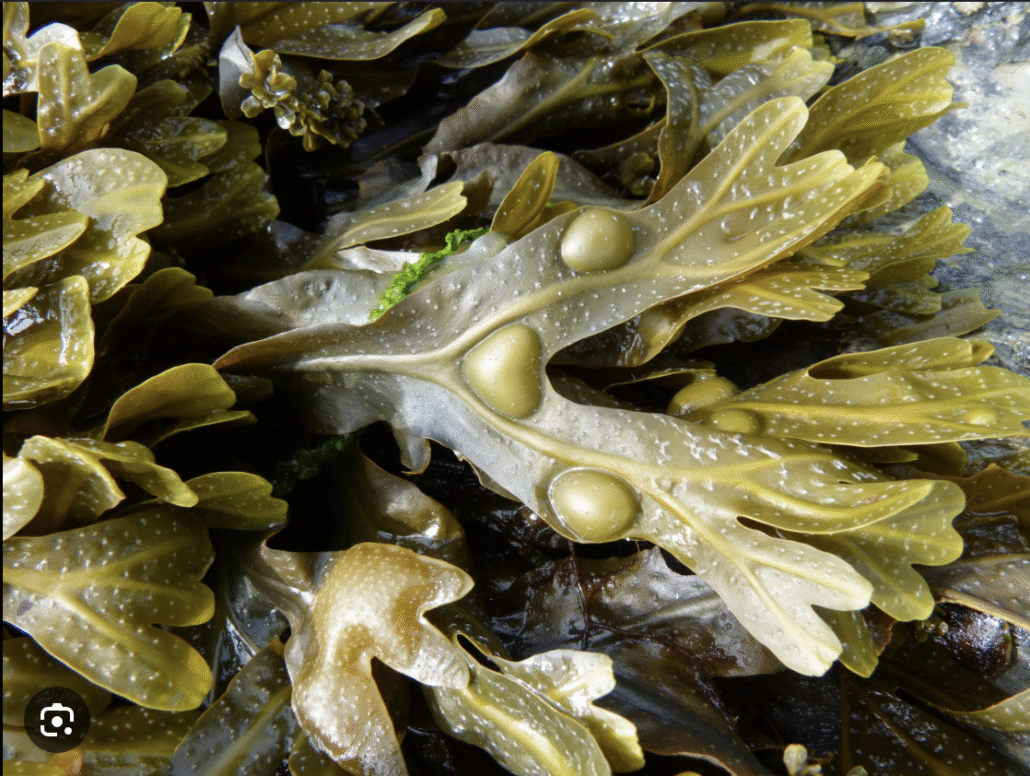
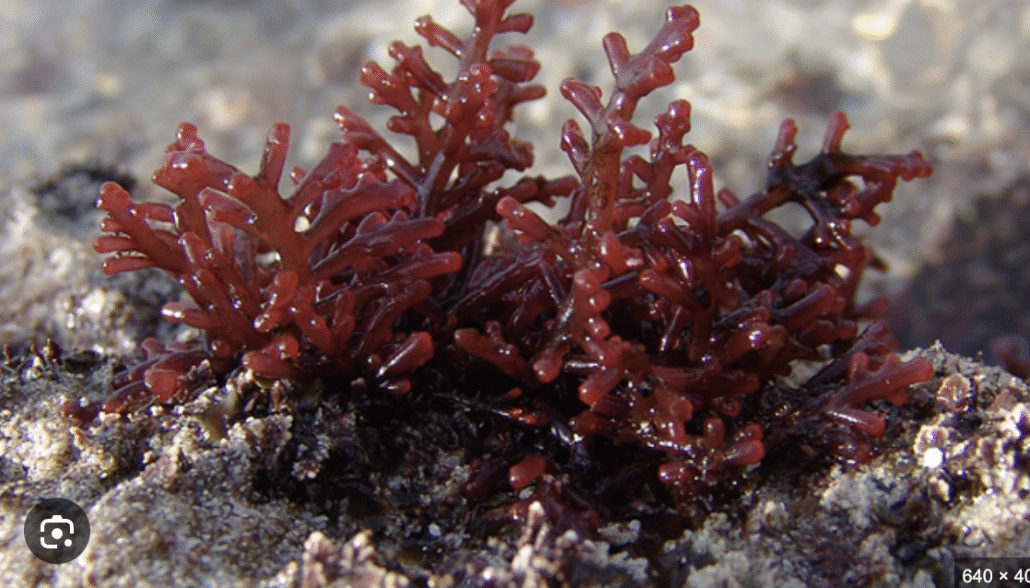
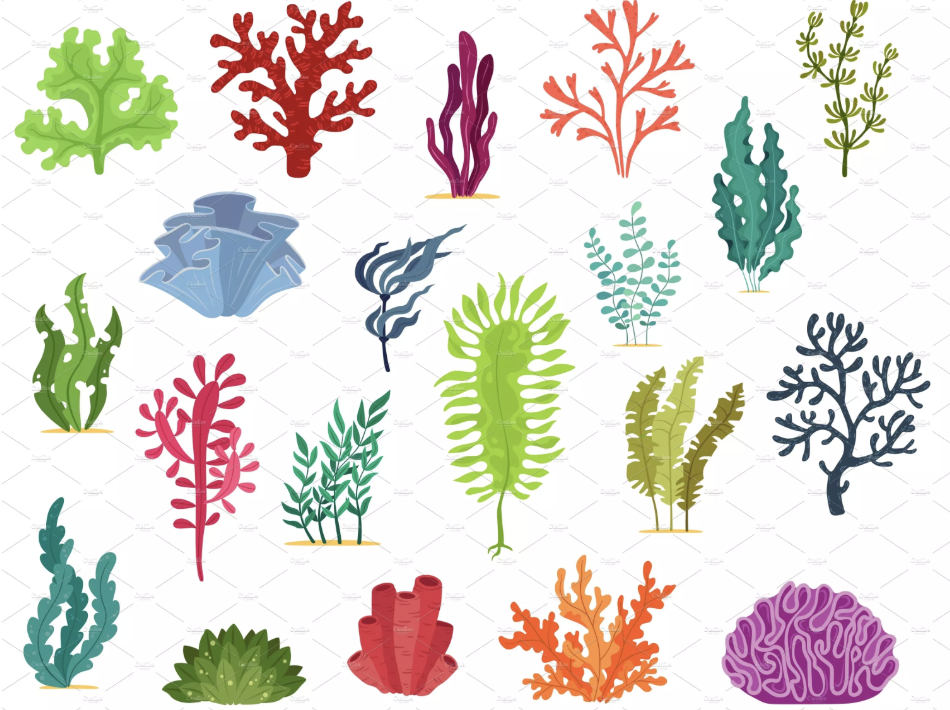
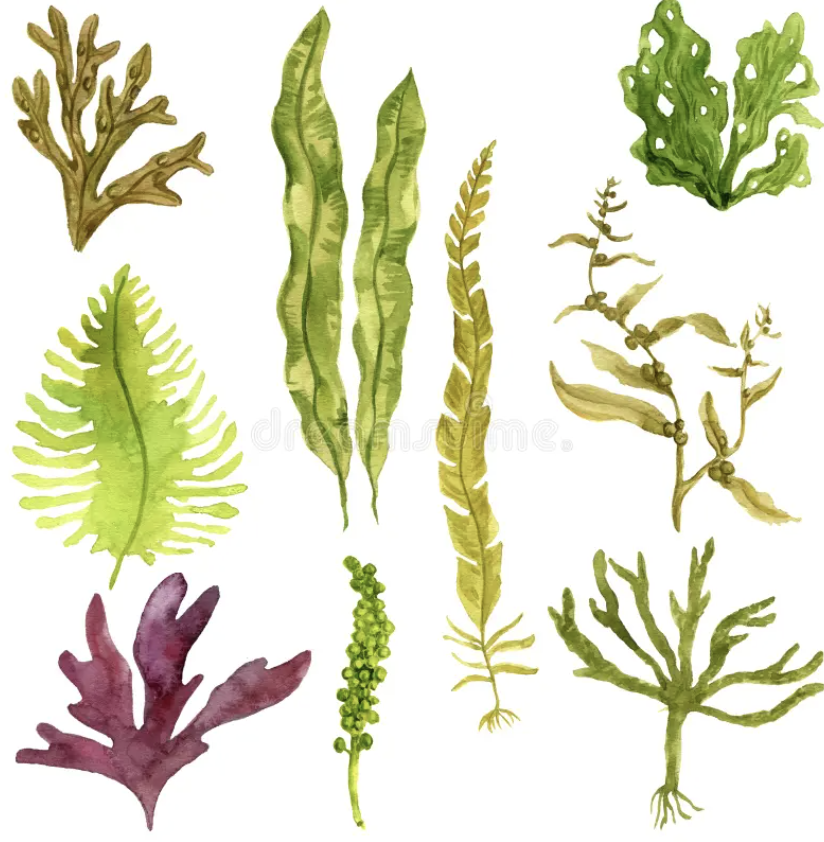
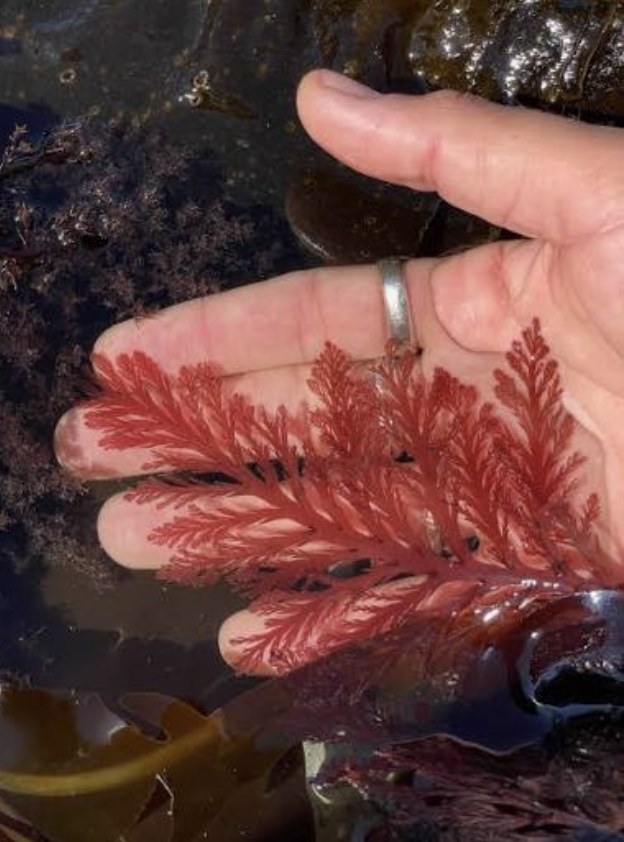
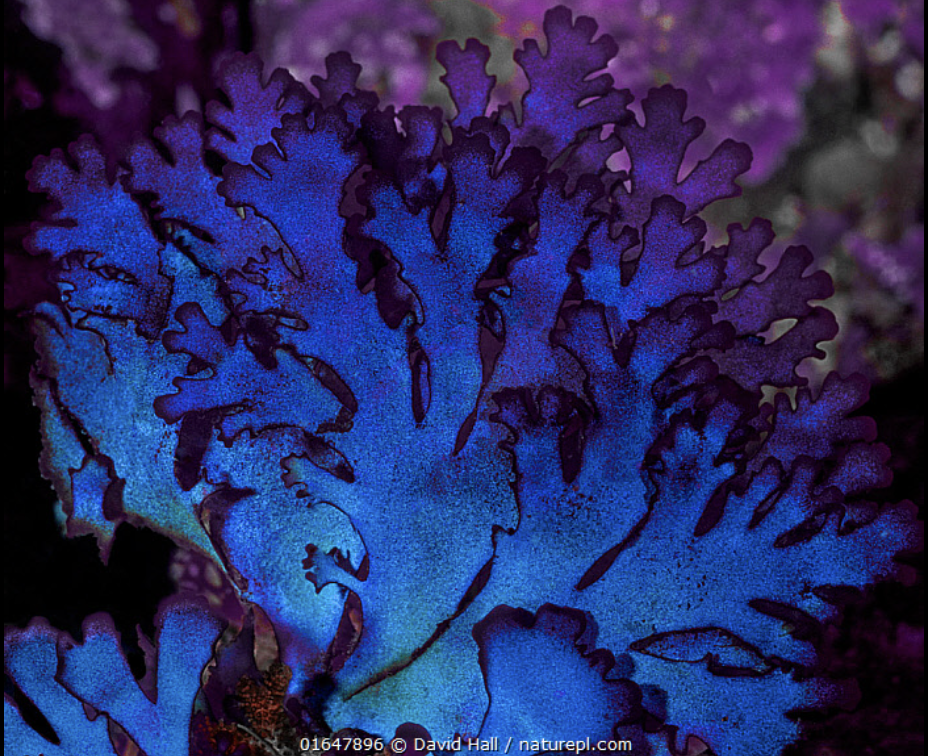
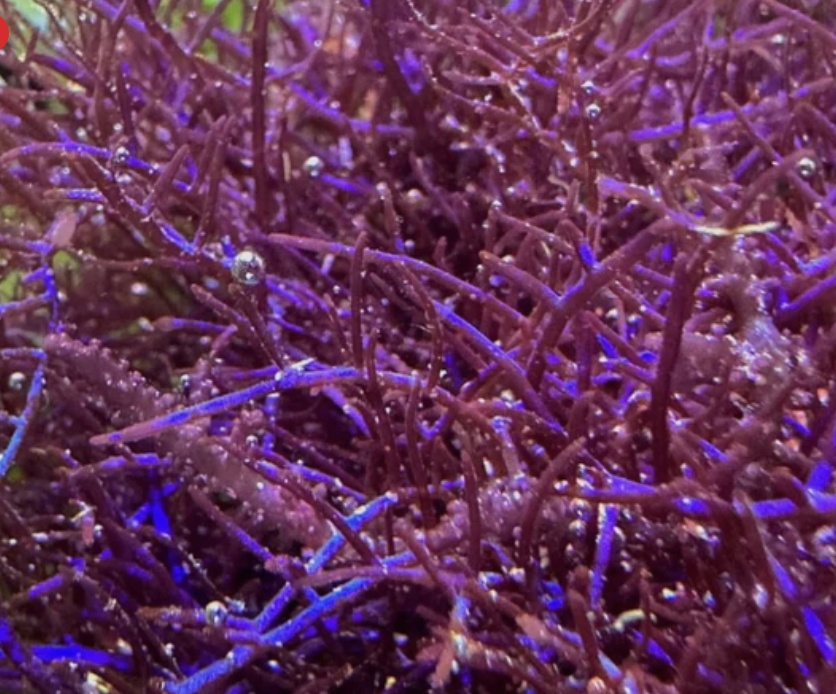
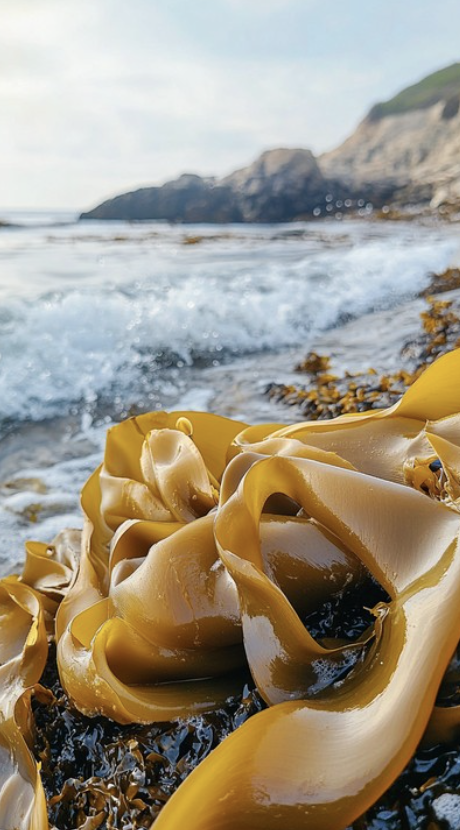
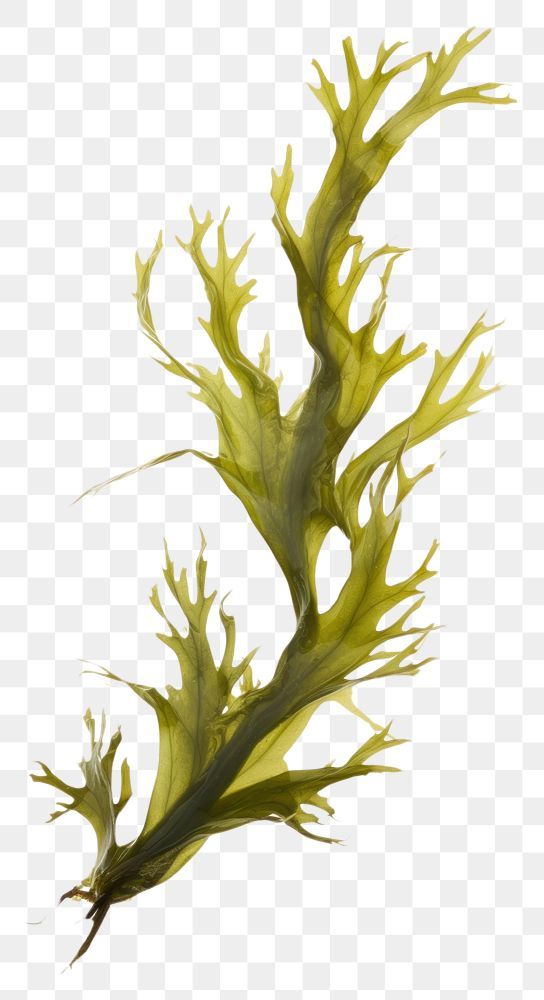
You’ll cut one long piece that’s around 36”-48”, and then later tie it to the string with a double knot so that the ends hang on either side of the rope, and it looks like 2 strands of seaweed. Using the hot knife, quickly trace it over the fabric, making the shapes of the seaweed you want. It will slice through the fabric, cauterizing the edges. Once you’ve cut out one piece, it leaves a cauterized edge along the larger piece of fabric. You can use that edge as the edge for a new piece, so you use less effort and waste no fabric. Pick a shape for each color of fabric, and try to make them different from each other for variety. So maybe the purple fabric makes multiple thin strings, the wrinkled green fabric makes long, wide, kelp-like ribbons, and the red makes wide, squat “claw” shapes – you get the idea. At the end of this document there are some pictures for inspiration. You’ve got options for creating different textures as well as shapes – You can tie knots along a length of fabric to reproduce the “bulbs” on kelp strands, make multiple little cuts along an edge for a shredded look, make sinuous, wavy cuts to give that “lettuce” look, etc. Keep in mind that heavy fabric will hold a wider, squatter shape without just rolling up when it hangs like a thin fabric would.
Hanging
Once you’ve cut your strands, stretch out your 20’ sections of rope between two upright supports, then loosely knot the seaweed strands along it. The seaweed strands should each hang down about 18” to 24” from the rope. Intersperse the different types for maximum variety. Once all the cut pieces are on all the ropes, space everything out evenly, redistribute amongst the ropes as needed, then tighten the knots to lock the strands in place on the rope.
Bundling
First, get the magnets ready by running a zip tie through the bracket on the back of each one, but do not pull the zip tie closed. Next, lay out a seaweed strand, a 20’ extension cord, and a 20’ strand of icicle lights next to each other. Have the plug of the light string go into one of the outlets on the end of the extension cord. Once the 2 strands and 1 extension cord are arranged, attach to each other in a single, 20’ long bundle with the magnet zip ties every 12” – 18” along the length. Try to have the magnets all facing the same direction to make installing them easier on the playa. Voila! SpeedWeed.
On Playa
Have 2 people per strand. Unroll the strand along the ground, then lift up and attach to the shade structure conduit overhead with the magnets. Add a ball bungie at each end of the speedweed strand, plus one in the middle, for security in case of high wind. Plug in, making sure to connect no more than 3 extension cords together in a row for safety. Once you have 3 speedweed strands connected in a row, plug that into a long extension cord which runs to the nearest spider box.
Example Seaweed